NOVEMBER 15, 2019: A sudden and substantial hike in the cost of fuel sparks unrest across Iran. Individuals across the country pour into the streets in what soon became mass protests covering a reported 104 cities across Iran.
As the anniversary of the November protests approaches, HRA has spoken with Iranians calling for concrete action against those responsible for violent crackdowns against protesters including arbitrary and incommunicado detention, illegal use of force, and torture among other serious violations. For nearly two years, perpetrators have, for the most part, enjoyed widespread impunity. Domestically, some have even seemingly been rewarded. Indeed, individuals such as now-President Ebrahim Raisi, a known and serious violator, have risen to top positions of power.
Soheila, a 45-year-old mother whose son was shot in the November 2019 protests, highlights the shortcomings of the judiciary in Iran, telling HRA, “I hope that accountability will mean that next time, my child, instead of taking to the streets, can work through established pathways to hold corrupt people accountable for their actions.”
November 2019 saw the deaths of several hundred Iranians (227 were verified by HRA) in what is arguably a state-sanctioned arbitrary deprivation of life. In addition over 7,100 were arbitrarily detained, some remain detained today. Although the violations noted above have been extensively documented, little has been done to hold perpetrators accountable.
Figure 1: reported November 2019 protest points -black denotes locations where the killing of protester(s) was reported (Human Rights Activists in Iran)
Elika, 25, told HRA, “Without accountability for violations that occurred in November 2019, the cycle of repression and violence will not end. Those that intend to perpetrate future abuse [on us] need to see accountability. Maybe then they will take a moment to think before pulling the trigger.” In a recent post in the Atlantic Council IranSource blog, Skylar Thompson, HRA Senior Advocacy Coordinator, stated similarly, “Without concrete action to fight the plague of impunity that covers Iran, these violent events will only continue to occur and the Iranian people will continue to suffer.”
Iran has proven unwilling to investigate and prosecute those responsible through domestic judicial frameworks. The unwillingness is paired with the fact that Iran’s judiciary is in no way impartial and is in fact led by the very perpetrators responsible for the noted violations. Unfortunately, violations of fair trial standards have become the status quo.
When asked what accountability looks like to him, Hafez, 22, told HRA, “They should handcuff the perpetrators. […]. They should be prosecuted in a public court and imprisoned.” He continued, “Once handcuffed, perpetrators should have to look the victim’s mother in the face to calm her heart.” Nazanin, 32, told HRA that accountability, in her view “is [the Islamic Republic] honestly and openly admitting wrongdoing.”
HRA has identified 54 individual and seven institutional violators connected to the November 2019 protests. It Is noteworthy that a number of those violators have also been complicit in numerous additional acts of repression against protesters including in 1988, 2020 (protests over the shooting down of Ukrainian airliner), 2021 (protests over resource mismanagement in Khuzestan), and many instances in between. This repeated action is a direct consequence of the lack of accountability.
The following section lists notable individuals documented by HRA as responsible for repeated serious and widespread rights violations. Extensive and credible documentation is readily available. HRA calls on the international community to hear the pleas of Iranians like Hafez, Nazanin, and Elika and utilize available documentation to take concrete action against those responsible.
*For a more in-depth look at the listed violators select a name and be directed to a violator profile that includes several data points including an overview of violations, employment history, as well as additional evidentiary documentation.
“THE IRANIAN GOVERNMENT, RATHER THAN RESORTING TO VIOLENCE, SHOULD
FACILITATE PROTESTS, AND ENABLE PEOPLE TO PROTEST WITHOUT FEAR OF PHYSICAL VIOLENCE OR OTHER HUMAN RIGHTS VIOLATIONS.”
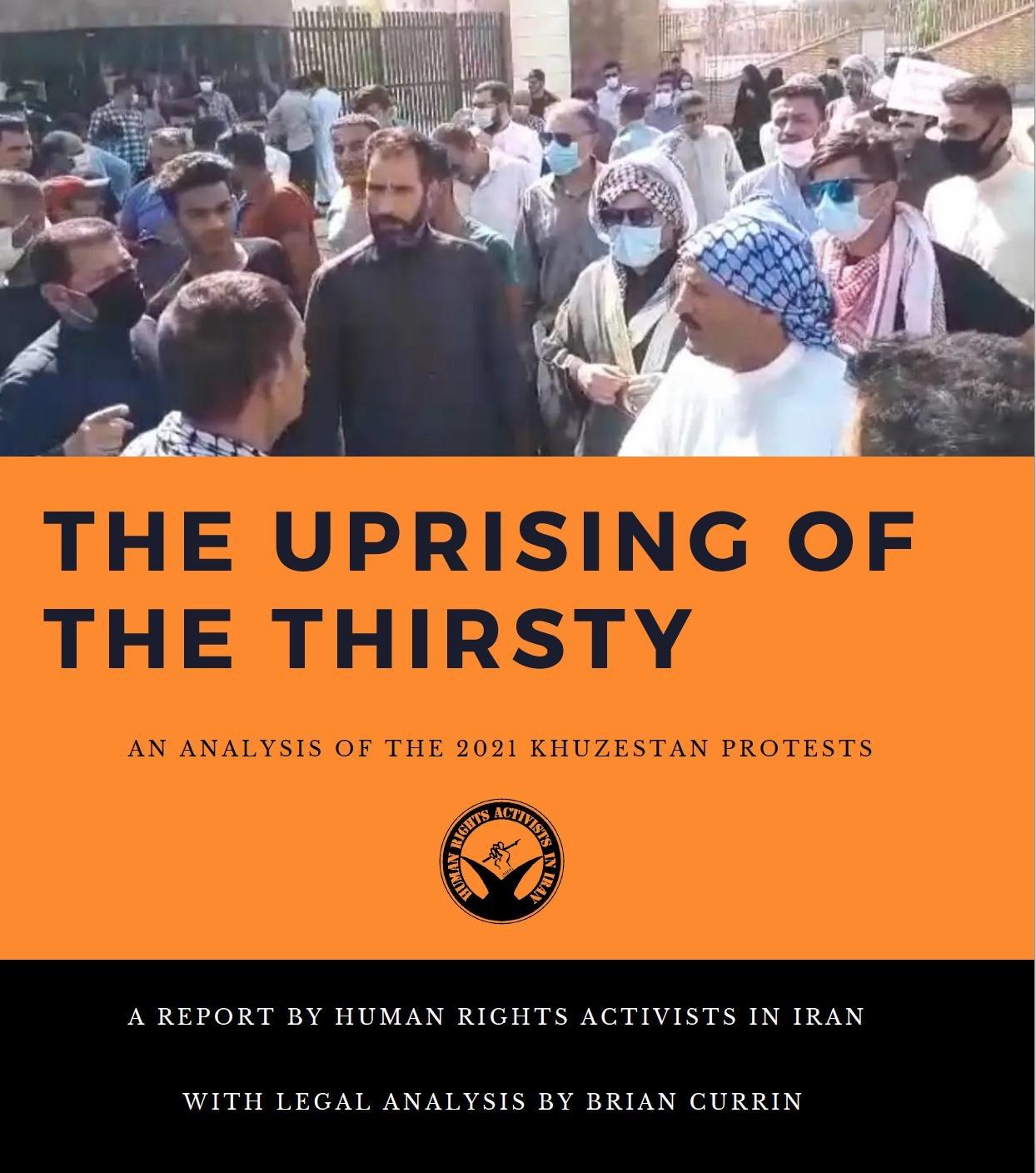
The July 2021 Iranian protests were a continuation of protests that have been erupting sporadically since 2016. The driving force behind the July/August uprising was to protest the perennial water shortages and rolling blackouts stemming from mismanagement of resources, fueling public anger. The latest round of protests erupted on 15 July, starting in Khuzestan soon spreading to other provinces including Isfahan, Lorestan, Eastern Azerbaijan, Tehran, and Karaj. These protests have been coined the ‘Uprising of the Thirsty’.
As nearly 5 million Iranians in Khuzestan are lacking access to clean drinking water, Iran is failing to respect, protect, and fulfill the right to water, which is inextricably linked to the right to the highest attainable standard of health; both are protected by the International Covenant on Economic, Social, and Cultural Rights (ICESR), to which Iran is a signatory. It is a common cause that Iran’s water crisis has reached a critical point. Even the regime’s state-run media have acknowledged the dire situation, with at least 700 villages out of water.
According to the state-run Aftab News on July 4, 2021, “Of Iran’s population of 85 million, about 28 million live in areas with water shortages and are under pressure in this regard, mainly in the central and southern regions of the country. Water shortages have affected all sections of society, from urban households to agricultural and rural communities.”
It did not take long for the protests to take on a political character, with protesters in various cities calling for the end of the current regime and expanding the subject matter of their protests from water shortages to deteriorating living conditions.
One protester told HRA, “My ideal outcome is to see a regime official resign in response to our suffering.We are tired of all of this misery, poverty, dehydration, neglect, lies, and empty promises.”
A protester living in Tehran told HRA, “Besides supporting [the people of] Khuzestan, we are protesting unemployment, high prices, poverty, and the existing problems in the country. We can no longer bear the hardships of life created by unworthy officials. The authorities must address the problems…”
In the two weeks of the uprising, Human Rights Activists (HRA) verified 129 videos documenting the protests, 361 arrests, 6 deaths, and several more wounded. HRA’s Spreading Justice team (HRA-SJ) additionally identified individual violators associated with the violent crackdown. The following report analyses the events that occurred as a result of the uprising, those responsible, and concludes with a call for accountability noting that without action, this cycle of abuse will only continue.
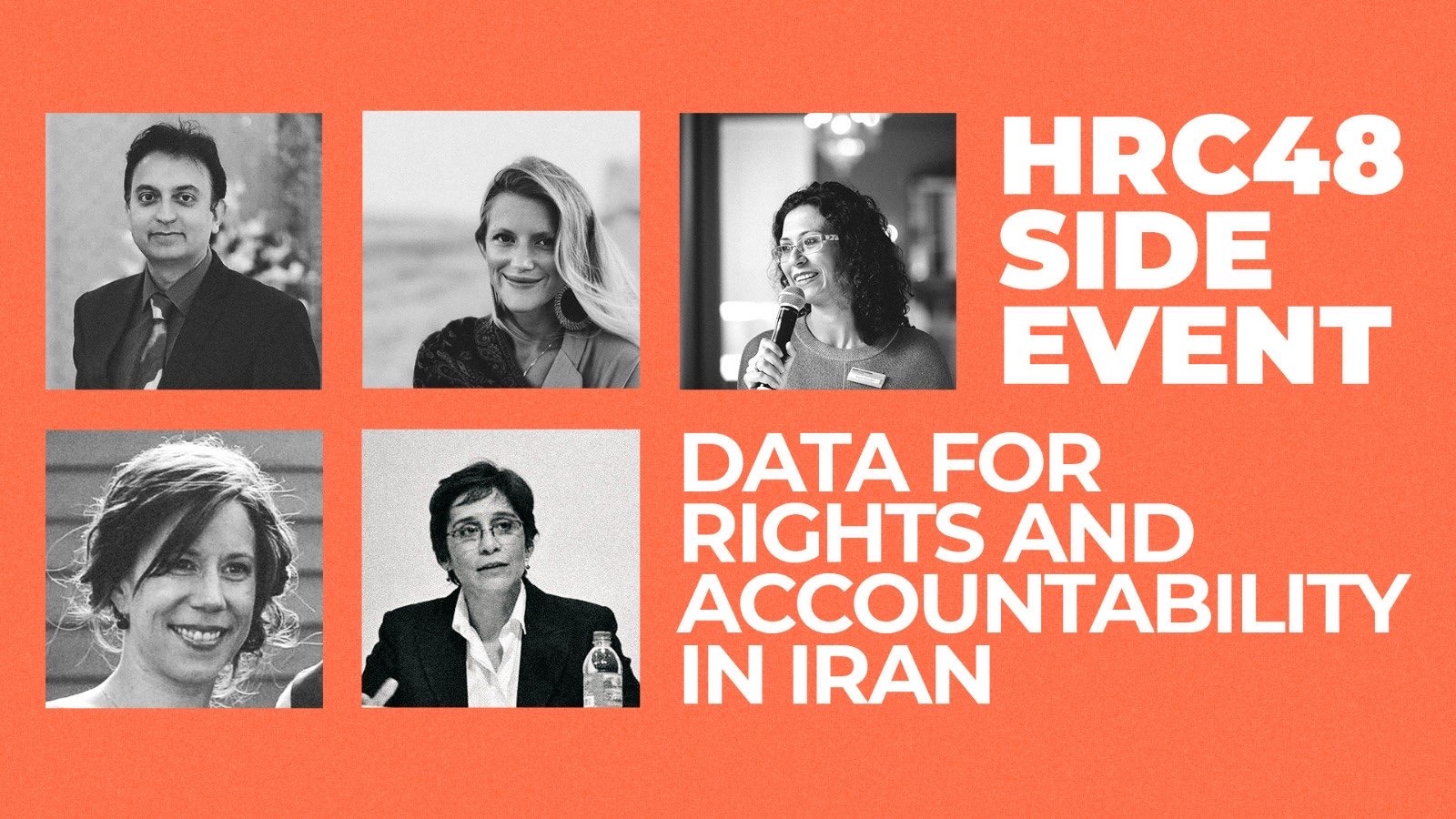
On September 21st, a number of prominent human rights organizations, including HRA, Impact Iran, HURIDOCS, and the Abdorrahman Boroumand Foundation, hosted a virtual discussion in the margins of the 48th session of the United Nations Human Rights Council on how online databases can help monitor human rights in Iran and support accountability efforts.
In an announcement of the event, Impact Iran stated, ” In recent years, human rights organizations have developed a range of online tools that have strengthened the capacities of rights defenders to advance evidence-based reporting and advocacy aimed at generating a culture of accountability and transparency in pursuit of the realization of human rights for all persons.”
United Nations Special Rapporteur on the situation of human rights in Iran Dr. Javaid Rehman delivered the event’s opening remarks, in which he highlighted the important work of the organizations represented by the panel. He mentioned Abdorrahman Boroumand Center’s OMID Memorial, the Spreading Justice’s Initiative by Human Rights Activists in Iran, and Impact Iran’s Iran Rights Index, which is a culmination of work by the Impact Iran Secretariat and coalition members including HRA.
“The individual characteristics of the different databases that are the topic of discussion today… all indicate that civil society organizations have clear goals in their well-coordinated documentation efforts,” Rehman stated. “Each of these databases serves a valuable goal for public information advocacy, memorialization, or support accountability mechanisms.”
In demonstrating how HRA’s Spreading Justice database can contribute to accountability efforts, panelist and HRA Senior Advocacy Coordinator Skylar Thompson outlined the functions and goals of the project.
“Spreading justice is a database of Iranian Human Rights violators, both individual and institutional violators,” Thompson said. “This database, which is available in both English and Farsi, currently contains over 250 profiles, ranging from Iranian president Ibraham Raisi himself to lesser-known violators that continually commit heinous acts, and yet fly almost silently under the radar.”
On the functions of the database, Thompson said, “If an individual were doing research on an individual victim’s case, they could, for example, search Nazanin Ratcliffe and find all violators associated with her case.”
The profiles also include detailed legal reviews prepared by experts in international human rights law. HRA collects information from open-source research, and through its wide network of volunteers inside Iran. Volunteers receive training aimed at strengthening organizational documentation capacity, which includes online security, diversity and inclusion, neutrality, informed consent.
“The information that is collected through this network is extremely important to our work,” Thompson said. “It also gives us unparalleled access to victims.”
On the use of the database, Thompson stated that there is a real need for governments to work alongside civil society, in their efforts to hold perpetrators accountable, and added that this was a core motivation behind the development of Spreading Justice.
She continued, “If we can begin to close the accountability gap in Iran, we will begin to see a disruption in the continuous cycle of abuse,” Thompson said. “The truth is that the international community has a number of tools available to hold perpetrators of serious human rights violations accountable, particularly when domestic judicial remedies are unavailable, such as is the case in Iran. The use of these tools is lacking.”
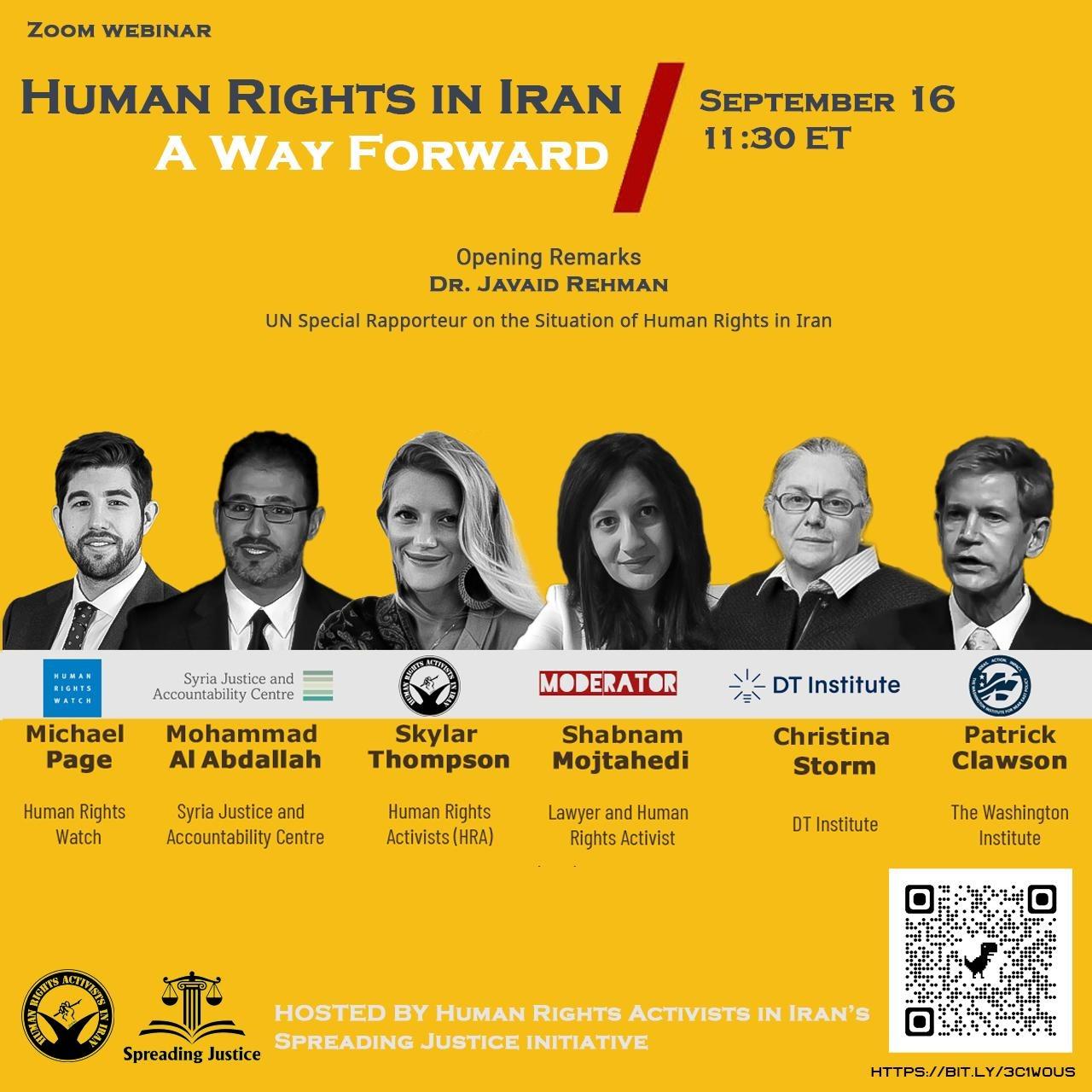
On Thursday, September 16, HRA hosted “A Way Forward”, a virtual discussion on the role of diplomacy in advancing the goal of promoting human rights in Iran. The event, which had over 100 participants, was moderated by lawyer and human rights activist Shabnam Mojtahedi, and panelists included representatives from a number of prominent human rights organizations.
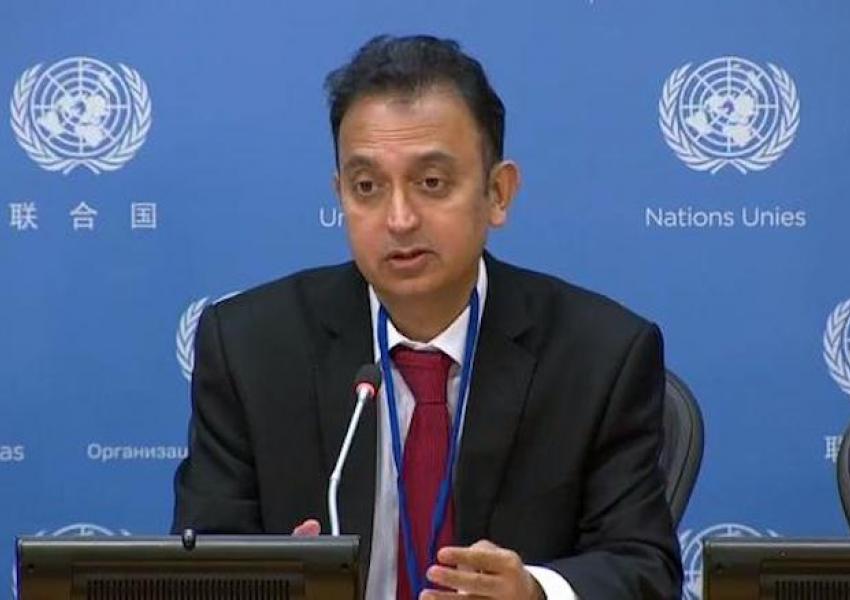
Dr. Javid Rehman, UN Special Rapporteur on the situation of human rights in Iran, delivered the event’s opening remarks, in which he highlighted the importance of protecting and promoting a more free civil sector, and emphasized the extent to which human rights and civic freedom go hand in hand.
“We can see around the world that in countries where there is a dynamic and free civil society, there is better protection of human rights,”
Javaid Rehman
Special Rapporteur on the situation of human rights in the Islamic Republic of Iran
“We can see around the world that in countries where there is a dynamic and free civil society, there is better protection of human rights,” Rehman said. “In Iran, civic space is under significant constraint. Civic space actors, such as human rights lawyers, defendants, and journalists are targeted, harassed and excluded. Moreover, the channels for political participation are by law severely restricted and manipulated, to the extent that they prevent meaningful participation.”
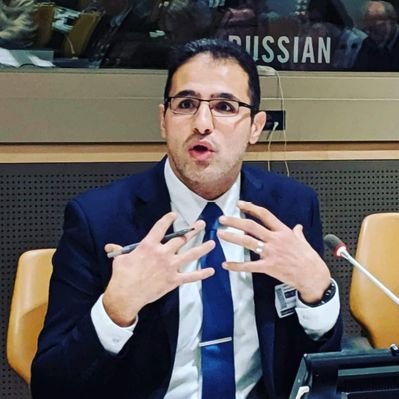
Mohammad Al Abdallah, Syrian rights activist and Director of the Syrian Justice and Accountability Center, spoke on the culture of impunity in the Middle East, and the ways in which widespread human rights violations can become normalized in a region over time.
“When you don’t have a well-designed policy that is consistently related to human rights in the region, that will be interpreted as a green light. ‘Go ahead, we don’t care, nobody is looking,’ ”
There was a particular emphasis throughout the discussion, from several of the panelists, on the effectiveness of accountability and rights work on a granular level. Between holding individual violators accountable and working with individual victims, activists and small organizations can make a tangible difference in the communities they oversee.
“When you don’t have a well-designed policy that is consistently related to human rights in the region, that will be interpreted as a green light. ‘Go ahead, we don’t care, nobody is looking,' ”
Mohammad Al Abdallah
Director, Syria Justice & Accountability Centre
“My work has been focused on how to leverage internationally protected rights, and in particular Iran’s international obligations and commitments in a local/domestic context"
Christina Storm
Director of law division of DT institute/ founder of lawyers without borders
Panelist Christina Storm, who now serves as director of the rule of law division of the DT institute, started her career as a trial lawyer where she founded Lawyers Without Borders. Through this organization, she spent 20 years harnessing lawyers around the world to advance human rights on local and international courts, and most of that work happened at an individual level.
“My work has been focused on how to leverage internationally protected rights, and in particular Iran’s international obligations and commitments in a local/domestic context,” Storm said.
Panelist Michael Page, who serves as deputy director in the Middle East and North Africa division at Human Rights Watch (HRW), proposed that three ways the US can further goals of human rights in Iran are adopting a ‘Do no harm’ approach, building multilateral pressure on human rights issues in coordination with Iranian policy, and holding Iranian officials accountable outside of the country.
How human rights organizations can better support the victims of Ukraine International Airlines Flight 752, which was shot down by the IRGC, killing over 170 people, and then covered up by the Iranian government.
On the subject of accountability, discussion attendant Hamed Esmaeilion asked how human rights organizations can better support the victims of Ukraine International Airlines Flight 752, which was shot down by the IRGC, killing over 170 people, and then covered up by the Iranian government.
Page spoke on organizations’ capacity to push for domestic accountability. “We need to show […] if there has been any domestic accountability for what has happened,” Page said. “The short answer is [that there has] not, but I think that’s the first step.”
Meanwhile, Al Abdallah pointed out the work that can be done in providing resources and relief to the affected families, in what he calls a ‘victim-centered approach’.
“Part of the work that human rights organizations can do is supporting the families and helping them better frame their policy demands with member states,” Al Abdallah said, “as well as encouraging diplomats to meet with the families.”
Several participants asked questions relating to sanctions, and panelists touched on a number of ways in which broad sanctions end up having harmful effects on the countries whose human rights violators they purport to be holding accountable.
“Broad Sanctions in Iran have contributed to serious hardships for ordinary Iranians,” Page said. “Working with businesses and civil society, I think the Biden administration should, as a starting point, seek to mitigate the negative impact of broad sanctions including this issue of ‘over-compliance’, in which companies refuse to sell goods or services to people in Iran because of the risk of sanctions, even though those goods and services have humanitarian exemptions.”
"Broad Sanctions in Iran have contributed to serious hardships for ordinary Iranians"
Michael Page
Deputy director in the Middle East and North Africa division at HRW
On a related thread, panelist Patrick Clawsen, a senior fellow at Washington institute, pointed to the US-sponsored sanctions with Swiss and South Korean governments, which were designed to facilitate Iranians’ access to humanitarian goods.
“None of these have worked,” Clawson said. “A major issue is that the Iranian Authorities have decided that they have adequate access to humanitarian goods through the channels they are now using, which can best be described as evading the sanctions. And they find it easier to use barter and other means (…) rather than going through the quite-onerous requirements.””
“A major issue is that the Iranian Authorities have decided that they have adequate access to humanitarian goods through the channels they are now using, which can best be described as evading the sanctions."
Patrick Calwson
Director of Research at the Washington Institute
"There needs to be a broad expansion of the use of targeted sanctions regimes, (...) Targeting individuals has proven to be a more effective policy than targeting institutions,"
Skylar Thompson
Senior Advocay Cordinator at HRA
Thompson suggested an increased emphasis on holding individual violators accountable, rather than further investing in these broad economic sanctions that have historically proven so ineffective.
“There needs to be a broad expansion of the use of targeted sanctions regimes,” Thompson said. “Targeting individuals has proven to be a more effective policy than targeting institutions,”
Rehman additionally called for creative solutions, on the part of both NGO’s and governmental organizations, in working to integrate principles of human rights into every level of the civic process.
“As part of the rule of international law, It is imperative that human rights be a part of every bilateral and multilateral discussion, not just with Iran, but with all countries. “
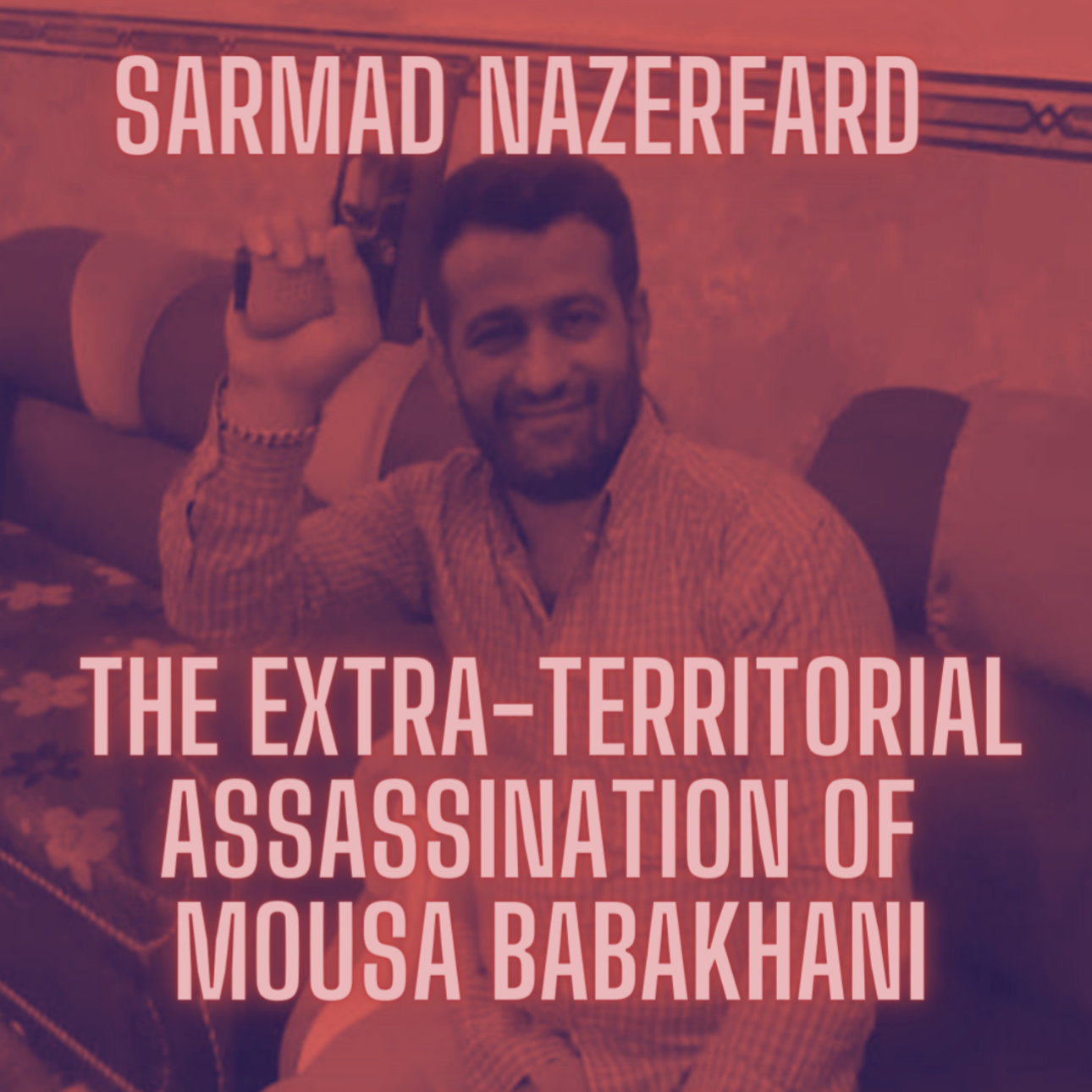
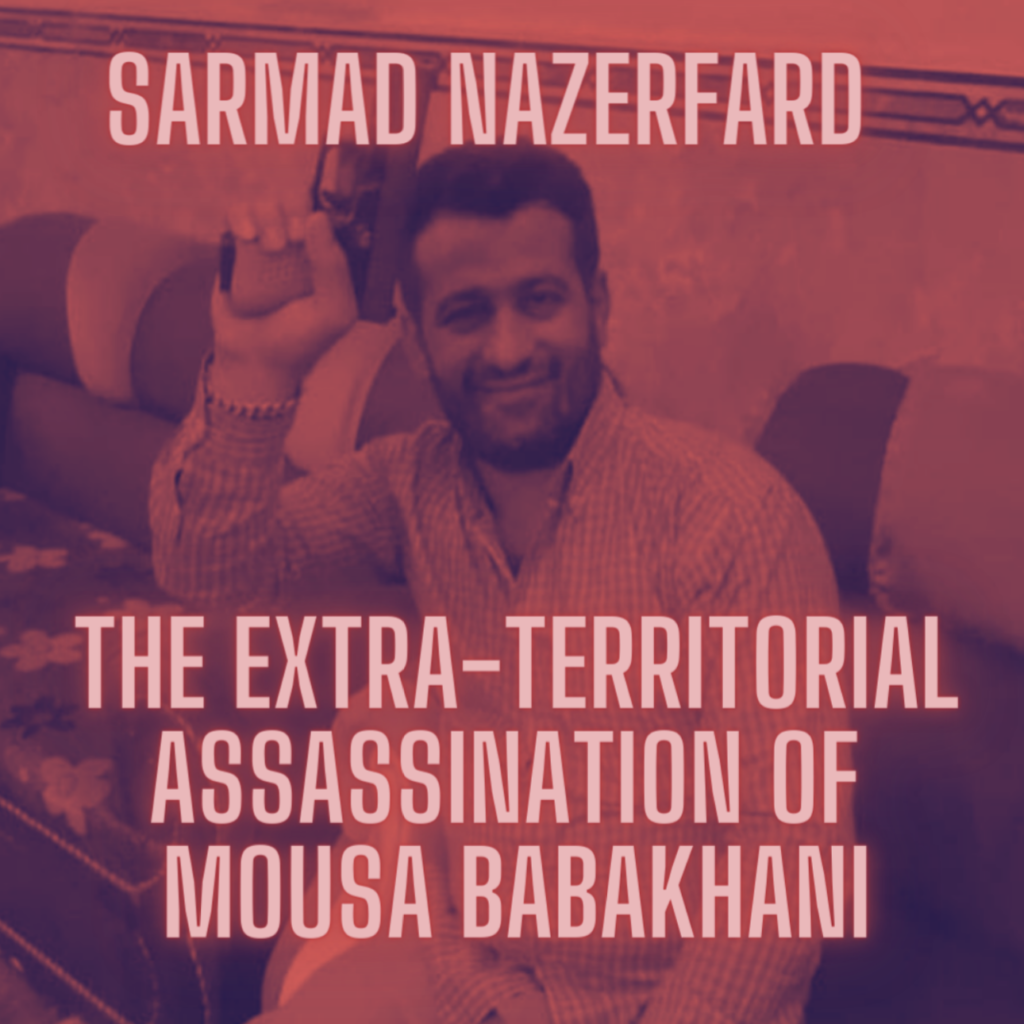
Human Rights Activists in Iran’s Spreading Justice team (HRA-SJ) has identified and profiled Sarmad Nazerfard as the individual responsible for the assassination of Mousa Babakhani in Iraqi Kurdistan.
Mousa Babakhani was a member of the Central Committee of the Kurdistan Democratic Party (KDP), a known opposition party of the Islamic Republic. Nazerfard is believed to have assassinated Babakhani before fleeing to Iran.
The Assassination
According to sources close to HRA, it is believed Nazerfard was commissioned by the security services of the Islamic Republic, namely the Revolutionary Guards Intelligence Organization.
Erbil police and third party news sources have confirmed that Nazerfard shot and killed Babakhani in an Erbil hotel on August 6th, 2021. An informed source stated to HRA-SJ, “The room where Mousa Babakhani’s body was found is a room registered to Nazerfard, who is also wanted by the Erbil police.”
Sources revealed to HRA-SJ that Babakhani traveled to Erbil to meet with Nazerfard. The two were in contact the night preceding the assasination.
Nazerfard allegedly stayed at the Goli Soleimani Hotel for eight months and had been in contact with Mr. Babakhani for several years, working to gain his trust. According to Ismail Sharafi, a member of the Central Committee, Mr. Babakhani believed that Nazerfard was a friend.
Hotel staff testified that Mousa Babakhani entered the hotel on his own and reported directly to Nazerfard’s room. Nazerfard reportedly confiscated Babakhani’s personal belongings, including his mobile phone. Sourced believe Nazerfard carried the belongings with him upon fleeing to Iran.
Nazerfard Flees to Iran
It is believed that Nazerfard entered Iran via the Iraq-Iran border at Khanaqin. According to the Iraqi Kurdistan Regional Security Agency, in Erbil, Sarmad Nazerfard travelled to the border town of Khanaqin after leaving Babakhani.
According to the KDP, “Nazerfard was not a member of the Peshmerga or even a member of the party and his relationship with Mousa Babakhani was not a party affiliation at all.” The source continued, “Sarmad’s name does not exist in any of the party’s organizational records.”
Who is Sarmad Nazerfard?
Born in Baghdad, Nazerfard, immigrated to Iraq at least four years before fleeing to Iran. Kamal Karimi, a member of leadership of the KDP, confirmed in an interview with the judiciary that the history of Sarmad Nazerfard’s presence in Erbil dates back at least four years. According to Karimi, “Sarmad Nazerfard, also known as Saman Abdiand Sarmad Abdi in Erbil, had been in friendly relations with Mr. Babakhani after arriving in Erbil and had met him regularly.”
According to Kamal Karimi, Sarmad Nazerfard regularly traveled to Iraq and Khanaqin and always claimed that he was going to Baghdad to visit his father. According to Karimi, Sarmad even told the hotelier when he was about to leave the hotel after Babakhani’s assassination that he had to go to Baghdad immediately to visit his father.
The Role of the IRGC
There is a long history of IRGC commission murders in Iraqi-Kurdistan.
A member of KDP leadership stated, “Although we do not have reliable information about Nazerfard’s relationship to Iran’s security agencies, the Revolutionary Guards have previously carried out such work, and through this agency, people from Iran are given missions.” “They have previously come to Kurdistan to carry out sabotage and assassination.” Nazerfard, and those believed to have commissioned his services must be held accountable.
Extra-Territorial Assassinations
Extra-territorial targeted killing outside of war is a violation of international human rights law prohibiting the arbitrary deprivation of life. “Iran has long practiced extra-territorial assassinations against dissidents abroad. This illegal practice of state-sanctioned targeted killing must be condemned by the international community and perpetrators must be brought to justice,” said Skylar Thompson, Senior Advocacy Coordinator at HRA-SJ.
More information on Nazerfard can be found via this link to his unique Spreading Justice profile. If you have any additional information on Nazerfard you can anonymously submit to HRA-SJ here.
According to HRANA, the news agency of Human Rights Activists, several rights organizations have written a statement calling for increased accountability from UN representatives in Iran
Human Rights Activists in Iran (HRA) has joined 10 other organizations in urging UN Secretary General Antonio Guterres, UN Resident Coordinator Stefan Priesner, and a number of county directors of UN agencies in Iran to uphold the UN’s promise to prioritize human rights and commit to “use all leverages they have to promote and protect human rights in the framework of their fieldwork activities in Iran”.
The statement demands that, in order to ensure accountability from UN representatives, the signatory organizations be directly involved in the oversight process, and outlines the ways in which current endeavors to work with the Islamic Republic have failed to sufficiently highlight human rights.
“We regret that the current UN Development Assistance Framework (UNDAF), signed between the Islamic Republic of Iran and 15 UN agencies in 2015, had marked the UN system’s failure to acknowledge and address core human rights issues as part of its activities in Iran,” the statement reads.
The letter concludes that the first step towards adhering to the above values is to “consult, involve, and listen to the input from independent human rights monitors both within and outside the country”.
"To all those who sacrificed to advance the rights of others. To those who went to prison, into exile, to our mothers- who were our first human rights teachers, to those who died in love along the way. To Jamal Hosseini, Farzad Kamangar, Michael Cromartie, Taher Elchi, Ali Ajami"
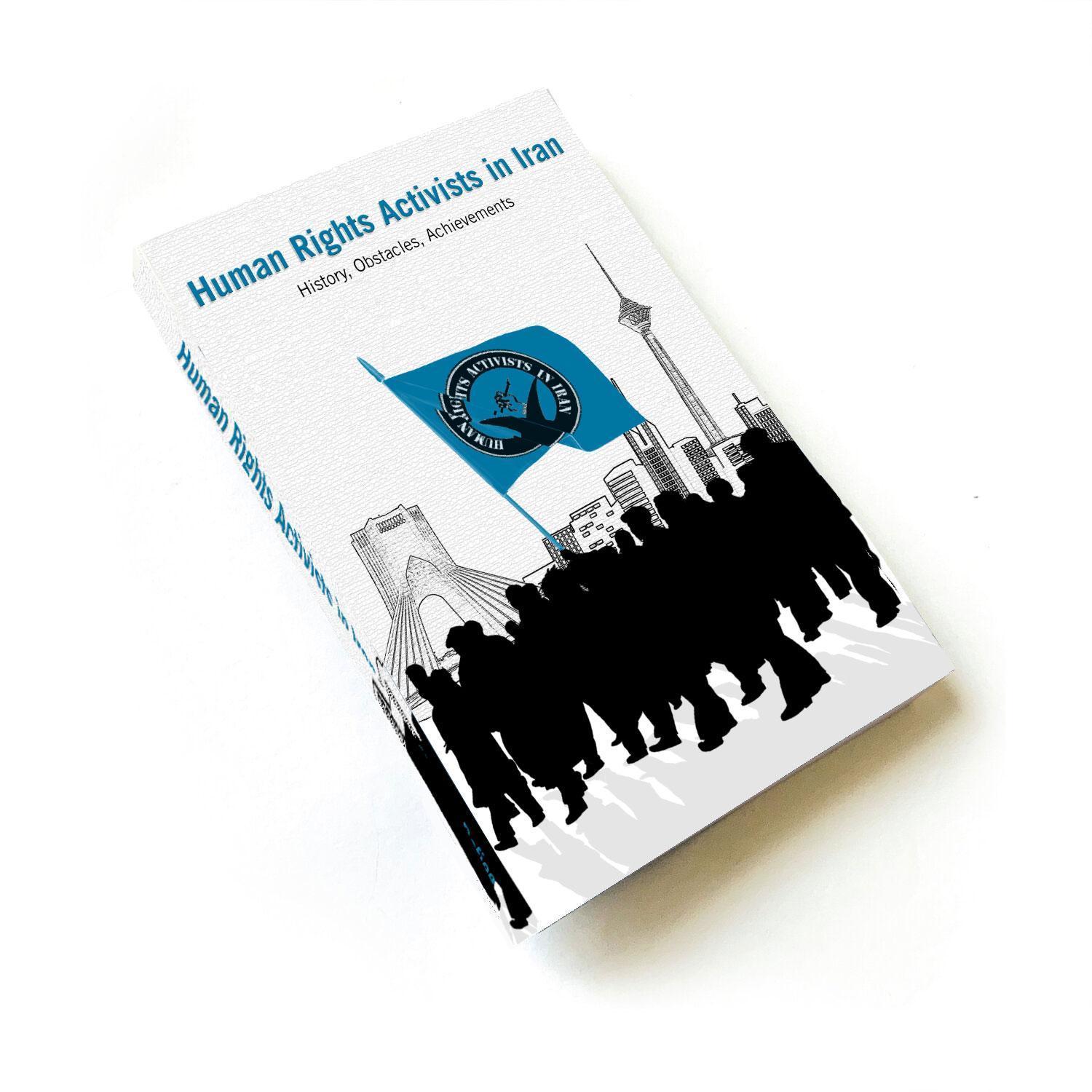
Human Rights Activists in Iran is pleased to announce the forthcoming August 30th release of ‘Human Rights Activists in Iran: History, Obstacles, Achievements’ now available for pre-order at Barnes and Noble.
Human Rights Activists in Iran (HRA) has been documenting abuses and advocating for the rights of victims inside of Iran since 2006. Founded by Director Keyvan Rafiee, the organization has grown from grassroots activism to a multi-divisional non-profit organization headquartered in Washington D.C. USA. Today, HRA is one of the oldest operating organization focused on human rights in Iran and boasts the largest network of in-country volunteers.
The story of HRA is fraught with struggle; members have worked tirelessly to promote respect for human rights and have consequentially faced imprisonment, exile, and death.
Human Rights Activists in Iran: History, Obstacles, Achievements is dedicated “To all those who sacrificed to advance the rights of others. To those who went to prison, into exile, to our mothers- who were our first human rights teachers, to those who died in love along the way. To Jamal Hosseini, Farzad Kamangar, Michael Cromartie, Taher Elchi, Ali Ajami”
The opening chapter, written by Keyvan Rafie, tells the story of how HRA was formed during a time when he and his founding colleagues were imprisoned. He reflects on the challenges, widespread as they were, including a lack of technology, citing a time before the widespread availability of the internet in Iran, as well as targeted harassment. Determined to create an organization that would stand the test of time, he writes:
“We realized that without planning, discipline, and a coherent structure, there was no hope for our survival. By studying and by gaining experience [in human rights], we were able to develop certain principles... The lack of any of [these principles] would have meant the end of our activism.”
Keyvan also notes core principles that were established at the organization’s founding, principles that continue to lead HRA today: being youth-led, maintaining a social base inside the country, and the principle of non-discrimination, among others. The book features sections dedicated to HRA members that have lost their lives as a result of their dedication to human rights, including Farzad Kamangar, executed at the hands of the regime, and Jamal Hosseini, who lost his life while working in exile.
Throughout the book, prominent human rights activists, lawyers, and community leaders share their stories and experiences of both being part of HRA and witnessing its work, in the hopes of inspiring future generations of activists. They include:
Keyvan Rafiee – Founder and Director of Human Rights Activists in Iran
Behrouz Sadegh Khanjani – Head of the Iranian Church organization and a former prisoner of conscience
George Haroonian – Iranian-American Jewish human rights activist
Simin Rouzgard – Former Editor of Peace Mark Magazine
Ladan & Roya Boroumand – Founders and directors of Abdorrahman Boroumand Center
Rezvaneh Mohammadi – A Gender and Sexual Minorities activist who was sentenced to 5 years because of her activism
Shahed Alavi – Journalist and Kurdish rights activist
Habibollah Sarbazi – Journalist and founder of the Baloch Activists Campaign
Shirin Ebadi – Lawyer, founder of Defenders of Human Rights Center in Iran, a former judge who received the Nobel Prize for Peace in 2003
Kavian Sadaghzadeh Milani – Founder of the Center for Health and Human Rights, Baha’i rights activist
Simin Fahandaj – Spokesperson for the Baha’i International Community
Dian Alaei – The Baha’i International Community representative
Kouhyar Goudarzi – Journalist and co-founder of the Committee of Human Rights Reporters
Hossein Raeesi – Lawyer and author
Hadi Ghaemi – Founder of the Center for Human Rights in Iran
Dr. Abdolkarim Lahiji – Lawyer and President of the International Federation for Human Rights
Mehrangiz Kar – Lawyer, author, and human rights activist
Elahe Sharifpour-Hicks – Former Human Rights Watch researcher and director of the Human Rights and Planning Group in New York
Shadi Sadr – Lawyer, and Co-founder of Justice for Iran
Karim Khalaf Dahimi – Arab human rights activist
Ali Kalaei – Journalist and former prisoner of conscience
Ali Ajami – Former editor of HRANA, a former prisoner of conscience (he passed away in 2020)
Behrouz Javid Tehrani – Former prisoner of conscience for a decade, research assistant at Human Rights Watch
Jamshid Barzegar – Former BBC Persian site editor, director of the Persian section of Deutsche Welle (Germany)
Morteza Kazemian – Journalist and member of the Central Council of the Association for the Defense of Press Freedom
Najaf Nemati – Researcher, writer, and Turkish rights activist
Siamak Ghaderi – Editor-in-Chief of various newspapers in Iran, including the State News Agency (IRNA), a former prisoner of conscience, and winner of the Hellman Prize –Human Rights Watch
Reza Haghighat-Nejad – Author and analyst who is a contributor to many news media
Reza Haji-Hosseini – Editor of Human Rights section in Radio Zamaneh
Kaveh Ghoreishi – Activist, author, and reporter
Kambiz Ghafouri – Political analyst and journalist for various media outlets, including Radio Free Europe and Iran International
‘Human Rights Activists in Iran: History, Obstacles, Achievements’ is published in hopes that the tireless work of those who have sacrificed everything will forever be ingrained in history.
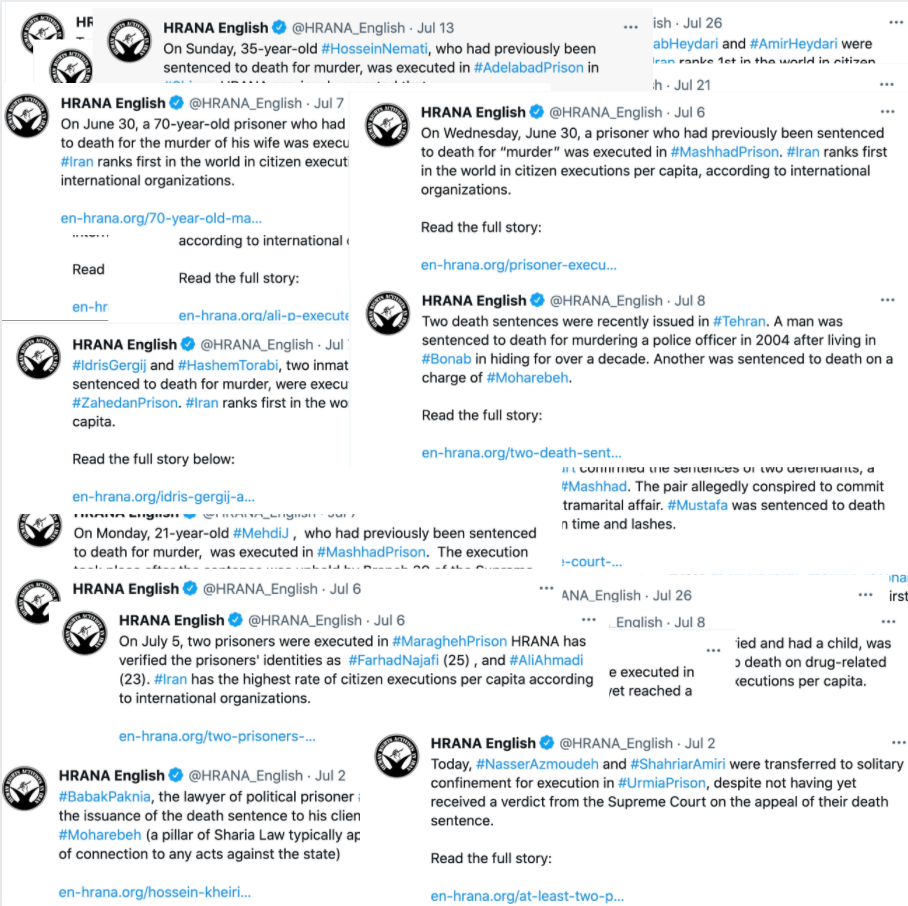
In July, Iran executed a staggering 38 individuals for crimes related to drugs, murder, and sexual offenses. In the previous three months, an additional 44 individuals faced the same fate. All of these executions took place under the direction of president-elect Ebrahim Raisi, who will assume office on Friday.
Raisi, who has been colloquially referred to as the “Ayatollah of Massacre” for his role in the extra-judicial executions of political prisoners in 1988, continues to evade accountability for his endless violations of human rights.
According to Senior Advocacy Coordinator, Skylar Thompson, “The impending Ebrahim Raisi presidency is a frightening illustration of the culture of impunity in the Islamic Republic of Iran; it shows that without international support for a meaningful pathway to accountability, Iranian citizens will continue to suffer at the hands of the regime.” She continued, “As Head of the Judiciary, Raisi presided over the highest number of executions per capita, and in addition has committed some of the most egregious crimes imaginable throughout his career, his impending position as President promises comparable ruthlessness”
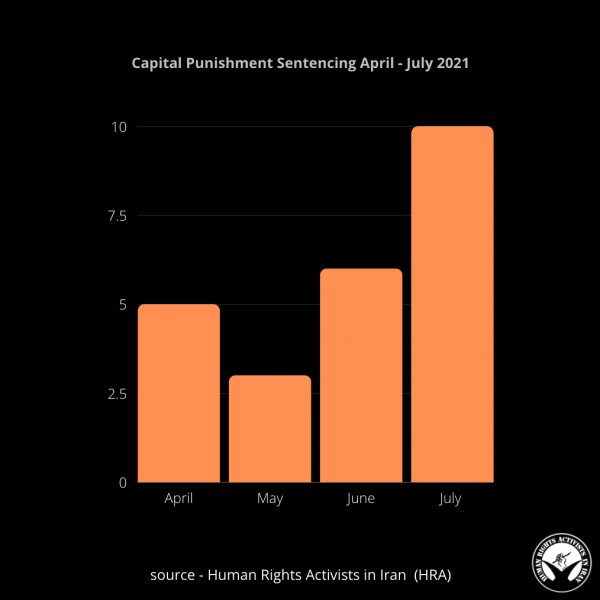
In addition to the staggering number of executions, capital punishment sentencing is also on the rise [See figure 1]. In July alone, a total of 10 people were sentenced to death, compared with 6 in June, 3 in May, and 5 in April.
While the death penalty is not prohibited under international law, in countries that have not abolished the death penalty, the sentence may only be legally imposed for ‘the most serious crimes’. According to HRC General Comment no. 36 on The Right to Life (GC 36), the phrase “the most serious crime” must be “read restrictively and apply only to crimes of extreme gravity”.
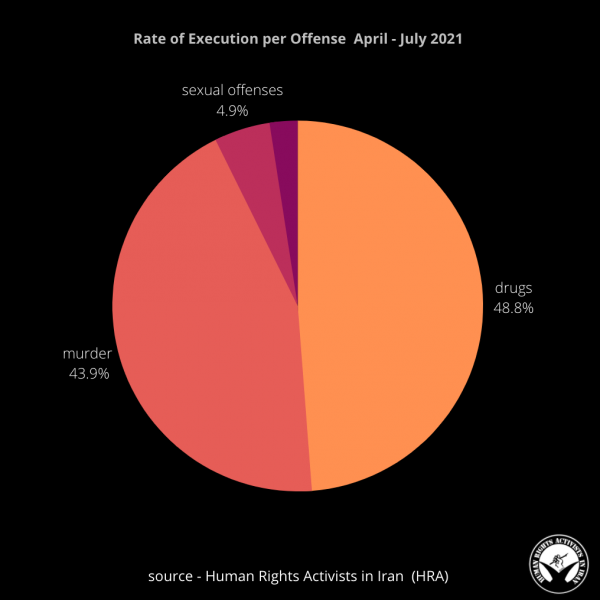
Iran’s judicial system interprets the phrase, to put it lightly, in a way that is less-than-restrictive. Despite recent legal reforms, drug-related offenses accounted for the highest number of executions between April and July (48.8%). GC 36 also establishes that “sexual offenses, while serious in nature, must never serve as a basis for the imposition of the death penalty”, but from April to July 2021, 4 individuals were executed in Iran on charges of a sexual offense.
One of the 10 executed in July was juvenile offender Baha al-din Ghasemzadeh. Juvenile executions are explicitly prohibited under international law, but they are an enduring practice within Iran’s criminal justice system. In fact, in a recent interview with Agence France-Presse, Secretary of the state-run High Council for Human Rights Majid Tafresh said that the Islamic Republic executes juvenile offenders “three to four times a year”, and claimed this should not be considered a human rights violation. According to HRA’s Spreading Justice Project Manager, Parasto Azizi, “HRAs Spreading Justice team has documented several individuals including judges and prosecutors responsible for imposing the death penalty for crimes falling outside of those internationally recognized as most serious including illegally imposing the death penalty in cases involving juveniles.”
*In addition to the numbers analyzed in this report, on August 2nd, two juvenile offenders were executed in Urmia Prison on drug-related charges.
The Use of Torture in Iran – Obligations, Violations, and Victim Testimony
The use of torture in Iran is vast, often state-sanctioned, and continually occurs with impunity. While States bear the sole responsibility for protecting the human rights of individuals within their jurisdictions, if they are unable or unwilling to do so, the international community must work towards ensuring that there is accountability for violations on part of the State.
Throughout history, and oftentimes in reaction to a negative international image, Iran has ratified five out of the ten core human rights treaties. In light of the upcoming World Day to Support Torture Victims, the international community must commit to working together to ensure there is justice and accountability for said violations.
State Obligations
The Islamic Republic is a State party to the ICCPR, with no reservations or derogations, thus obliging the State to respect all provisions within. Article 7 of the ICCPR expressly prohibits the use of torture, providing that “no one shall be subjected to torture or to cruel, inhuman or degrading treatment or punishment […]”. Article 7 is additionally complemented by positive obligations in Article 10 paragraph 1, which sets forth that “all persons deprived of their liberty shall be treated with humanity and with respect for the inherent dignity of the human person”.
The meaning of Article 7 has been debated and expanded upon throughout the years, most notably in UN Human Rights Committee (HRC) general comment no. 20.
In addition to international obligations, Article 38 of the Constitution of the Islamic Republic of Iran states, ‘The use of any type of torture for extracting information or confession from a person is not allowed. Forcing a person to testify, take an oath, or confess is not allowed and such statements given under pressure are invalid. Those violating this principle will be punished according to relevant laws.’
There is an ever-present culture of impunity in Iran. Closing the accountability gap requires a bold stance from the international community to commit to understanding the widespread use of torture in Iran and utilizing that information to hold human rights violators accountable. The brief analysis that follows aims to demonstrate Iran’s extensive use of torture in every meaning of the term – notwithstanding obligations under the ICCPR and domestic law. The examples given are by no means exhaustive.
Physical, mental integrity and prolonged solitary confinement
The prohibition of torture outlined in Article 7 relates not only acts that cause physical pain but also to acts that cause mental suffering to the victim. It is widely recognized that prolonged solitary confinement may amount to torture. In addition, prolonged solitary confinement is proven to cause both mental and physical suffering to the victim.
The use of physical torture in Iranian prisons can be divided into the following 3 categories:
Inflicting physical pain: floggings, use of handcuffs and shackles for prolonged periods of time, the beating of prisoners, hanging prisoners, amputation of body parts, and more.
It should be noted the above are a mere few examples of physical torture present in Iranian prisons. Amputations and floggings are provided for under domestic punitive law.
Deprivations: long periods of time in which prisoners are deprived of food, water, medical and sanitary products, sleep, fresh air, space to move, and/or healthcare.
There are several examples of prisoners kept in small spaces, denied medical and sanitary products, and healthcare. All of the above are instances that amount to torture. In addition, the denial of medical care is a violation of the right to the highest attainable standard of health. Where the lack of medical treatment leads to avoidable death there is an additional violation of the right to life.
Exploiting cultural taboos: sexual harassment of both men and women, force-feeding, harassing loved ones, and beating prisoners with items that might be sacred to their religion or culture. This type of torture is physical, but it also has a deep psychological impact.
The use of psychological torture in Iran is widespread. Psychological torture negatively impacting an individual’s mental health and is aimed at breaking down the victim leading to a negative interpretation of self-worth and altered perspectives.
Examples of psychological torture common in Iran over the past 4 decades:
Prolonged solitary confinement: limits all the sensory experiences and leaves the victim fully dependent on the interrogator or prison guard for every basic necessity of life, including food and communication.
In Iranian prisons often solitary confinement cells have their lights on 24 hours a day, making it extremely difficult for prisoners to count the days or sleep.
Control of access to information: many prisoners have stated how they were fed wrong information about the outside world while they were in solitary confinement. At times, they are told their friends or family members were also arrested, killed, or testified against them. There have been documented instances of individuals being told that their loved one was seeing someone else or had forgotten about them. There are also times that individuals are completely cut off from the outside world given no access to newspapers or the like. The latter is in addition to psychological torture, a violation of Nelson Mandela Rules.
Verbal threats: Individuals are threatened with physical torture such as; the rape of oneself or a family member, killing, or additional false sentencing in the name of societal shame i.e. changing one’s charge to moral corruption.
Creating shame and disrespect: examples: ethnic individuals forced to speak in Farsi, religious minorities forced to disrespect their own religion, and sexual minorities forced to deny and or insult their sexuality. In addition, female prisoners have documented instances of having been repeatedly told to list the men they have slept with.
Witness suffering: prisoners are forced to hear or witness the suffering of others. This includes: hearing others being beaten, watching executions, or watching others being tortured.
Interrogation and forced confessions
The use of statements or confessions obtained through torture is not legally admissible in a trial of the accused. The Human Rights Committee has expressed that forced confessions amount to torture under Article 7 of the ICCPR. These acts are also expressly prohibited in the Iranian Constitution.
Access to doctors and lawyers
Under the ICCPR, there should, in all cases, be prompt and regular access to doctors and lawyers. In the case of Iran, once imprisoned, many political prisoners and activists are denied access to both medical care and legal counsel. Instances of denial are well documented in HRANA reports. In addition, particularly in the case of those detained in Evin Prison, the lack of adequate medical care has been documented to lead to avoidable illness and death. There are serious concerns regarding the consequences of the denial of medical care.
The right to an effective remedy
Positive obligations onto the State include effective remedies for victims of torture, including compensation. However, victims and families of torture victims are often harassed, intimidated, and bribed. Iranian authorities systematically repress the efforts of those seeking justice for crimes committed against them including for torture.
Victim testimonies: physical and psychological torture
Yashar Piri
Yashar Piri, a Turkic ethnic activist from Tabriz city, was beaten during both his arrest and interrogation. His brother, Rouzbeh, wrote in a note that “Basij members in plain clothes arrested Yashar without providing a court order or a judicial officer card“. He continued, claiming that when “Yashar was arrested, he was hit on the head with an electric shocker and then pepper-sprayed in his mouth, his legs were tied with a belt, and after handcuffing him, the beating continued until he was drug to the ground and transferred to an unknown place while unconscious”. Yashar was released 3 days after his arrest, and has been in the hospital since being treated for his injuries obtained in this event.
Mohammad Doji
On November 18 of last year, 19-year-old Mohammad Doji died following severe physical torture in Amirabad Prison in Gogan city. Prisoners who witnessed the incident have stated, “There was a clash in the prison and the guard officer took off his [Mahammad Doji’s] clothes to punish Mohammad. He tied his hands and feet while he was naked and hung him from the ceiling of the prison in the cold. They beat and beat him until he was unconscious, they poured cold water on him, and all this was done in front of our eyes as to teach us a lesson. Unfortunately, this morning he could not stand the torture anymore.“
Hamid Rastbala
In August 2020, Hamid Rastbala, a Sunni Prisoner held in Vakil Abad Prison of Mashhad, wrote in a letter about the torture that he and other Sunni prisoners faced. He details torture aimed at forced confessions below.
Parts of this letter reads:
They recklessly call the Sunnis the military enemies of the Islamic Republic. We were tortured in solitary confinement for almost ten months to obtain false confessions. Many of us Sunni political prisoners were greeted with severe floggings and severe shocks (electrical shocks by shockers). Some of us were even sexually abused by spraying pepper spray on our genitals and anus.
They threatened to arrest, torture, assassinate and rape our families. Many of us suffered severe mental health concerns, and in order to halt the torture and pressure, we accepted any accusation that was leveled against us.
We even admitted and repeated these accusations in front of the video camera so that they would not harm our families. This is human rights and human dignity in the Islamic Republic.
Mohammad Alijani
Mohammad Alijani was arrested during the nationwide protests of November 2019 in Islamshar. He is currently being held at Greater Tehran Prison and is facing charges of Muharebah. In July 2020, Alijani wrote a letter about the physical and mental torture he faced.
Parts of his letter reads:
I, Mohammad Alijani, Reza’s son, was arrested by the security and intelligence police during the protests in November 2019. I was severely tortured physically and mentally.
I was made to confess to charges such as disturbing public order by participating in the riots and destroying public property of the Basij base, insulting the leadership, by force, and under physical and psychological torture.
I am the breadwinner of my home and my absence from home has caused problems such as falling rent and family problems to pay for the house. My family and I suffer greatly from this.
Abolfazl Karimi
Abolfazl Karimi was a juvenile at the time of arrest during the November 2019 protests. On March 16, 2020, Karimi wrote a heartfelt letter about his conditions and the torture he faced in Evin Prison.
Below is an excerpt from the letter:
I suffered a lot in ward 2A of Evin prison and was unaware of my mother’s pain [who had recently gone under surgery]. Because they did not allow me to contact my family and kept me in solitary confinement for 50 days. During interrogations, I was threatened with the arrest of my mother and father. I was also beaten with a shocker by the Akbarabad Revolutionary Guard’s intelligence; they claimed that I had killed one of the officers. Officers broke my head and pulled my toenails. Even now, all my toenails are falling out. They broke one of my teeth by kicking my face and during the interrogation in Branch 1 of Baharestan, they forcibly accused me of the crime. My request to everyone is to please not say that the IRGC intelligence does not hurt anyone. The IRGC’s intelligence is crueler than Shimr (Shimr is referred to as who is said to have killed Hossein (one of Shia 12 Imams) in the battle of Karbala).
The Afkari brothers
The Afkari brothers, arrested in relation to nationwide protests of August 2018, are said to have been made to confess against each other under severe torture. Even after one of them, Navid Afkari, was executed, the others continued to be tortured and kept in solitary confinement.
Their parents wrote a letter to the Judge Supervisor of the prison. An excerpt follows:
Mr. Hashemi, Judge Supervisor of Adelabad Prison of Shiraz; My children Navid, Vahid, and Habib Afkari were beaten and transferred to solitary confinement on 3 and 5 September 2020. For this reason, they demanded that their complaint be investigated, and the family also demanded that the beating and torture of their sons by Ali Khadem al-Husseini, a prison guard, be investigated. We demanded a forensic doctor go to the prison and record the injuries inflicted on my children, which were 17 in the case of Navid and about 15 in the case of Vahid and Habib.
However, 47 days later, no action has been taken and the office of Mr. Rezaei Dana, the director of Adelabad Prison, claims that the complaints were registered by Mr. Rezaei Dana. However, the reviewing authority does not give us the date of registration of the complaint and the letter number.
Niloufar Bayani
Niloufar Bayani, an environmental activist who worked as an expert at the Parsian Wildlife Institute, was arrested along with eight other environmental activists in early 2018. The arrests took place in a coordinated operation by the IRGC’s intelligence on charges related to “espionage”.
There are multiple reports that these individuals were physically and psychologically tortured. During the interrogation carried out by IRGC intelligence interrogators, Niloufar Bayani was abused and harassed. She was made to be completely naked and endured sexual assaults including inappropriate touching. She was threatened with rape and was severely beaten by officers using cables and hoses.
Bayani wrote a letter describing her detention conditions stating she was kept in solitary confinement for 8 months and was interrogated on a daily basis from 8 to 12 hours a day.
An excerpt of her letter follows:
“I was blindfolded, while being interrogated I was made to stand, spin or squat and stand again, I was threatened with the arrest and torture of my 70-year-old mother and father. They threatened me to be physically tortured by showing me images and descriptions of torture devices. And I heard hours about the suffering and pain that torture causes.”
The above are a mere few recent examples of many more known and unknown cases of physically tortured prisoners across the country. It should be noted that many cases of physical torture are never revealed and there can be no correct statistic given in this regard. These few cases were chosen to show that physical torture is being used widely for various reasons being punitive, making examples for others, extracting false confessions, and more. The examples also provide insight into the widespread use of torture not limited to one institution, rather country-wide. The featured cases also aim to highlight that the victims of torture can be anyone including juvenile offenders, women, ethnic minorities, religious minorities, and more.
Accountability
The frequent use of acts amounting to torture illustrates the deep level of impunty enjoyed in Iran. Closing the accountability gap requires a bold stance from the international community to commit to understanding the widespread use of torture and utilizing that information to hold human rights violators accountable.
Torturer Violator Spotlight
Sohrab Soleimani
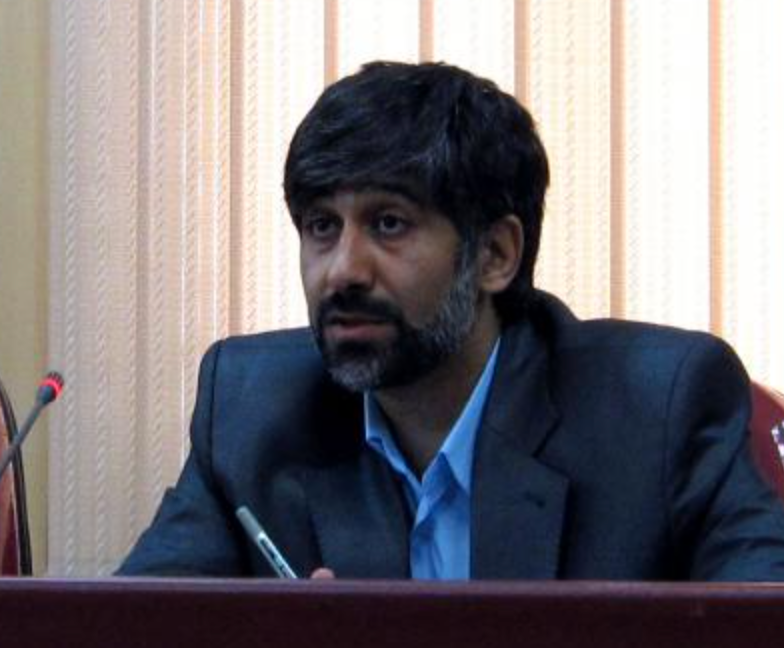
Sohrab Soleimani has been directly involved in and responsible for countless violations of fundamental human rights as the director-general of prisons in Tehran Province. These violations have included harassment, torture, and pressure on prisoners, especially in political and ideological prisons. There are many reported incidents of brutality against prisoners at the hand of Sohrab Soleimani. Imprisoned journalist Issa Saharkhiz suffered from frequent seizures while held in solitary confinement and protested the lack of medical care for political prisoners under Saleimani’s directorship. Article 10 of the ICCPR, as noted above, mandates that “all persons deprived of their liberty shall be treated with humanity and with respect for the inherent dignity of the human person”. In addition to the countless violations of both Article 7 and 10 related to torture, Soleimani is responsible for widespread violations of the non-derogable right to life. Soleimani and all of those acting under his control should be held accountable. Read more about Soleimani’s violations here.
Bahram Reshteh Ahmadi
As the Deputy Prosecutor for Security and the Head of the Evin Security Court, Bahram Reshteh Ahmadi has played a key role in violating the rights of defendants and political prisoners, as well as in detaining political, civil, and human rights activists. Ahmadi has additionally been directly involved in the harassment of political prisoners through the denial of access to legal counsel, a right expressly guaranteed under the ICCPR. Read more about Ahmadi’s violations here.
Hamid Mohammadi
Since June 2020, Hamid Mohammadi has been the warden of Evin Prison. As warden, Mahammadi carries the ultimate responsibility for the life and wellbeing of prisoners held there. Mohammadi is responsible for the cruel, inhumane, and often degrading treatment in Evin Prison in the form of torture, beatings, interrogation, and solitary confinement. He also bears responsibility for inmates’ frequent deprivation of health and medical care, which has led, in several cases, to avoidable physical and mental suffering and even death. Under Mohammadi, political prisoners and journalists such as Nasrullah Lashani, Keyvan Samimi Behbahani, Majid Asadi, and Golrokh Iraee have experienced harsh interrogations, prolonged solitary confinement, and lack of access to medical care, family, or lawyers.
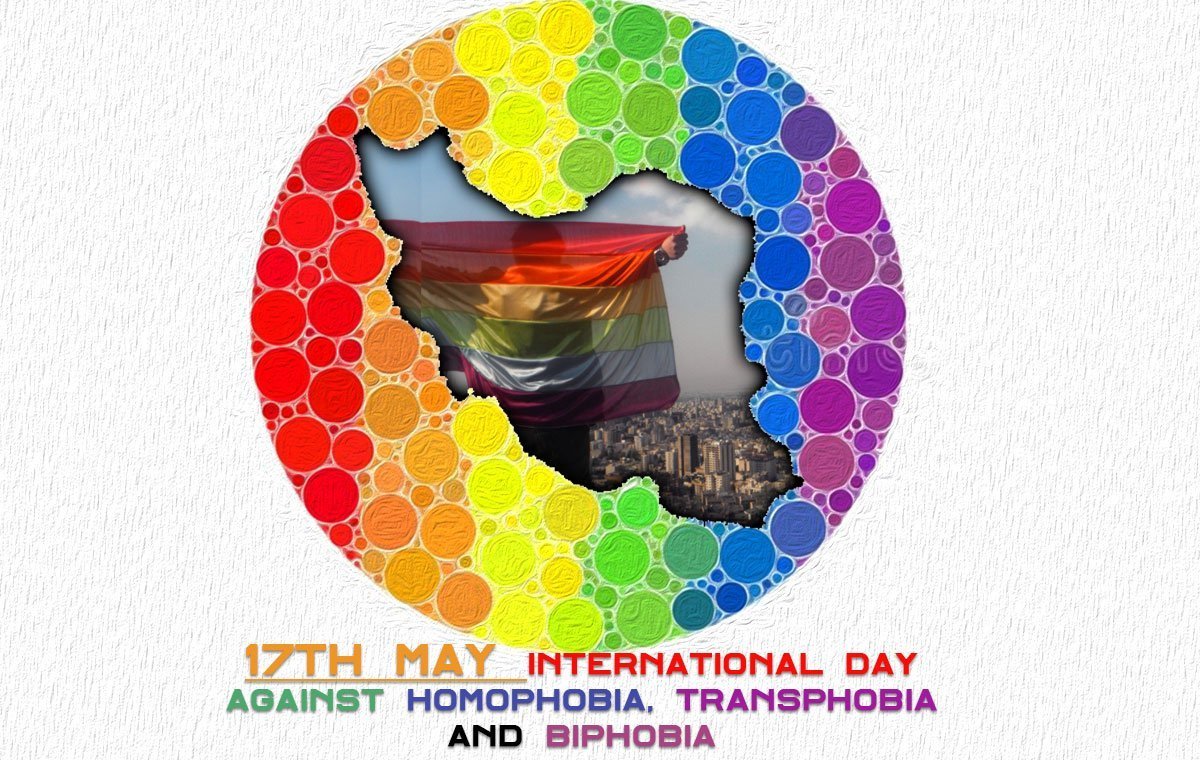
May 17, International Day Against Homophobia, Transphobia and Biphobia
Beginning in 2004, the 17th of May has been recognized as “The International Day Against Homophobia, Transphobia, and Biphobia”. This day was created on the anniversary of removing homosexuality from the list of mental disorders by the World Health Organization (WHO), and the aim is to raise awareness on human rights violations committed against the LGBTQ+ community around the globe. However, Iranian legislation, continues to penalize same-sex consensual relations, by floggings, imprisonment, or the death penalty. As a result, transgender persons are subjected to daily discrimination and rights violations, i.e., pressure to undergo sex reassignment surgery only being able to change their official identity and documents after doing so. This report by Human Rights Activists in Iran’s News Agency (HRANA), gives a brief overview of the LGBTQ+ rights in Iran, highlights cases of LGBTQ+ rights violations that have taken place between 17 May 2020 to 17 May 2021 in Iran, and lastly it highlights a list of serious human rights violators who have violated the rights of LGBTQ+ community in Iran.
It should be noted that unfortunately due to cultural sensitivity and legislative discrimination around LGBTQ+ cases in Iran, many of the violations in this regard are not reported all and the actual cases may be a lot more than the reported cases.
Instances of reported Structural and Social Violence Against LGBTQ+: cases from 17 may 2020 to 17 may 2021
Iran does not recognize homosexuality, and Iranian penal code makes sexual acts between two same sex individuals punishable by law, in cases even punishable by death penalty. Under this penal code kissing between two men or two women is punishable by 60 lashes, and if two men are find naked together ( if not blood related) can be punished by 99 lashes, dissemination of materials regarding LGBTQ+ literature are considered “immoral” and “corrupt” and can receive the highest form of punishment. Iran is one of the few countries in the world who allows execution for same sex conduct. Transgender identity is only recognized through state supported sex reassignment surgery. In cases homosexual individuals are pressured to go through sex reassignment surgery to be able to avoid legal and social pressure.
In May 2020, HRANA published a report on human rights violations against transgender prisoners who are held in a separate ward in Evin prison. This ward, ward 240 hall 1, is comprised of a common hall on the ground floor of the building called “Amoozeshgah”. There have been reports of physical and verbal violence against prisoners in this ward based solely on their gender identity.
Mohsen Lorestani, an Iranian pop singer, was arrested at his mother’s home on March 3rd, 2019, and was later prosecuted by the state’s attorney. His second court session was held in branch 28 of the Tehran Revolutionary Court, led by Judge Moghise. Mr. Lorestani was charged with “Corruption on earth”, his lawyer explained that this charge was based on the creation and administration of an Instagram group for transgender persons.
According to his Lawyer, Mr. Hosseini, the main accused persons in the case are military personnel, hence, his client’s charges suggest the possibility of transgender “Parastoo (Swallow)” being involved. “Parastoo” meaning Swallow Bird is a term used to refer to individuals who work with security and intelligence organs to trap their targets through romantic and sexual affiliation. This lawyer referred to the claim of “infiltration of security personnel including the highest-level political figures” by the military. Mr. Hosseini said that considering the high degree of control of the activities of the accused military persons by the security departments of military organs, the security aspect of the case is of particular importance, and it’s unreasonable to relate Mr. Lorestani with such a network. Mr. Lorestany was temporary released on 11 May 2020, on a 3 billion Toman Bail.
In June 2020, HRANA reported the summons and interrogation of several LGBTQ+ community members by the security organs after showing up on a highly visited Instagram. Several homosexual and transgender persons have faced persecution from the government because of their public presence in cyberspace where they talked about their sexual identity or orientation.
Based on HRANA’s sources, two individuals (identities protected by HRANA) in the northwestern provinces of Iran, were summoned and threatened by security organs after showing up on Instagram. “Maryam”, a transgender woman living in Iran, has spoken to HRANA about being summoned by the Morality Police of her city and being pressured to spy on her transgender friends and acquaintances to reveal information about their gatherings.
Although the National Statistics Center has never measured or published statistics on the unemployment of the transgender community, unemployment and job loss is a common concern among the transgender community living in Iran. Some transgender persons lose job opportunities because of their sexual identity and or refusal to undergo the suggested sex reassignment surgery. Several transgender persons try to hide their sexual identity from employers and colleagues even after sex reassignment surgery for job security.
In February 2020, HRANA reported on a transgender Iranian citizen deprived of employment due to the common Iranian perception that considers transgender persons “sick”. An example of such action involves a woman living in Tehran, “Delbar Ameri-Far”, who was prevented from continuing her work and renewing her license as an expert with the Iran Food and Drugs Administration (FDA). Ameri-Far was told that she could try again to get her license if she could provide sufficient documentation on her “continued treatment”. The letter from the Iranian FDA stated, “Your license renewal request will only be processed upon provision of medical documents certifying ongoing treatment and proof of your full health.”
The Iranian Public Conscription Organizations’ ongoing classification of transgender status as a disorder is while in 2019, the WHO, in their latest guidelines (ICD-11) classified transgender status under sexual health. Identifying as transgender is irrelevant to one’s mental health and according to many transgender rights activists, classifying it as a disorder leads to, among much more, social stigmatization.
Alireza Fazeli-Monfared young Homosexual person from Ahvaz was murdered on 4 May 2021 by a few men that is said to have been related to him. According to reports published on social media and LGBTQ+ rights activists his Murder has been related to expressing his sexual identity.
On 14 May 2021, Amnesty International on their social media channels, mentioned that despite ten days passing from the murder, those involved in the murder of the young 20 year were not arrested, and demanded that Iran look at his case with equal justice; they asked Iran to respect the human dignity of all sexual and gender Minorities in Iran.
According to the Iranian Penal code, same-sex consensual sexual relations are considered illegal, and if proved, are punishable by lashing, imprisonment, or the death penalty. Moreover, while not all transgender persons opt for sex reassignment surgery, under the current legislation their sexual identity is only recognized and validated after the surgery, i.e., changing names on official documentation. While there is still a gap in legislation on this topic, in 2013 a chapter of the Family Protection Act was dedicated to the transition process of transgender persons. Roohollah Khomeini, Supreme Leader at the time, authorized “sex change” surgery in a Fatwa in 1982.
While there is no international human rights mechanism that specifically addresses discrimination and violence against the LGBTQ+ community, discrimination based on sexual orientation is violation of Iran’s international human rights obligations, namely the ICCPR and ICESCR. Article 26 of the ICCPR states that the law must guarantee non-discrimination for persons “on any ground such as race, colour, sex, language, religion, political or other opinion, national or social origin, property, birth or other status .”
Additionally, the ICESCR at article 2(2) requires the state must guarantee that all individuals enjoy the rights in the ICESCR “without discrimination of any kind as to race, colour, sex, language, religion, political or other opinion, national or social origin, property, birth or other status”.
Individuals and institutions profiled in Spreading Justice complicit in violating the rights of the LGBTQ+ community
Affiliation: State prisons and security and corrective measures organization
As the Executive Deputy of Evin Prison, Javad Momeni has been directly involved in gross violations of and persecution of LGBTQ+ in this prison. According to published reports, he personally harassed and insulted transgender prisoners in Ward 240, known as the Transgender Ward, which holds transgender prisoners. According to an eyewitness, “the prison guards were constantly insulting us. They said you are a disgrace or corrupt. In addition, they put a lot of psychological pressure on us. “For example, one day a prison guard showed me a piece of paper to harass me and claimed that I was going to be executed.”
Affiliation: Intelligence Organization of the Islamic Revolutionary Guard Corps
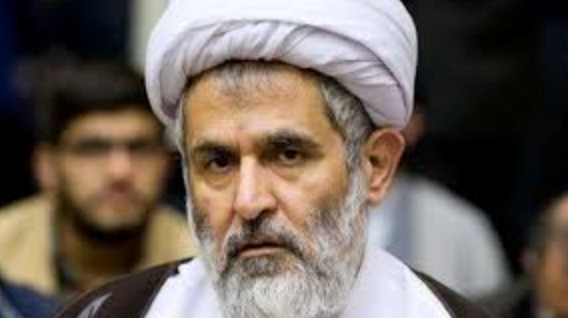
The Revolutionary Guards’ intelligence service has been suppressing, detaining, harassing, and violating the rights of LGBTQ+ community and their rights activists, and Hussein Tayeb, as the organization’s commander, is responsible for these actions. For example, in October 2013, IRGC intelligence agents raided a birthday party in Kermanshah and arrested several dozen people on charges of what was called “homosexuality.” According to a report published by HRANA, the news organ of the Iranian Association of Human Rights Activists, “the host of the party and the owner of the birthday party, nicknamed” Shervin “, was detained and tortured the most. They threw a rope into his cell and scared him. After his release, he was under pressure for a long time and was summoned until he finally committed suicide and ended his life. “Another person was under pressure for years to spy and was repeatedly contacted by IRGC intelligence.”
Affiliation: Judiciary of the Islamic Republic of Iran
As one of teh most nuterious judges who has been within the judiciaary of iran for more than 40 years in various roles, Ebrahim Raisi has played role in the violation of the rights of LGBTQ+ community.
Hossein Amiri was appointed as the Deputy Chief of FATA Police on June 26, 2019, by the Commander in Chief of the Police Force of the Islamic Republic of Iran. Since then, he, along with FATA Police Chief Vahid Majid, has been responsible for all human rights violations commited by this organ, including the restrition of expresison of sexual identity and LGBTQ+ litretature.
Affiliation: Iranian Cyber Police with the abbreviated name of FATA Police
Vahid Majid as the Commander in Chief of the Iranian Cyber Police, or FATA Police, is responsible for restricting the freedom of expression in cyberspace, including the restrition of expresison of sexual identity and LGBTQ+ litretature.
Affiliation: Supreme Court of the Islamic Republic
As the judge of Branch 28 of the Revolutionary Court of Tehran, Moghiseh is responsible for widespread rights violations related to sexual minorities.
In November 2019, Mohammad Moghiseh sentenced Rezvaneh Mohammadi, an LGBTQ+ rights activist to five years in prison for allegedly “normalizing homosexual relations” along with the charges of “Assembly and collusion against the national security with the intention of overthrowing the regime” through “collecting information and pictures regarding the mass graves of the executed prisoners of 1988”, and “decriminalizing homosexuality”, “normalization of illegal activities of sodomy”, “removing disgrace from homosexuals”, “making homosexual activity acceptable”, “trying to make the authorities of the Islamic Republic of Iran answer for violating the right of homosexual people and lack of recognition of homosexuality”
Mousa Ghazanfar-Abadi, as the then head of the Tehran Revolutionary Courts, is responsible for violating the rights of LGBTQ+ people and prosecuting their rights activists. In this regard, Branch 28 of the Revolutionary Court of Tehran in November 2009 sentenced Rezvaneh Mohammadi, a LGBT rights activist, to 5 years in prison for charges of “gathering and colluding with the intention of acting against the security of the country with the aim of overthrowing the regime”, “through collecting of information and pictures of mass graves of those executed in mass executions of 1988”, “decriminalization of homosexuality”, “normalization of illegitimate sodomy”, “decriminalization of homosexual acts”, “acceptance of homosexuality”, “efforts to hold the authorities of the Islamic Republic accountable for human rights violations and non-recognition Homosexuality”
As commander of the Islamic Revolutionary Guards Corp (IRGC), Jafari has been directly involved in widespread human rights violations by the Revolutionary Guards, including violations of the rights of sexual and religious minorities, torture of opponents of the Islamic Republic, violations of women’s rights, violations of the right to life, and the severe suppression of social freedoms in Iran.
In October 2013 IRGC-IO’s agents attacked a birthday party in Kermanshah and arrested a few dozen people for “homosexuality”. According to HRANA, “the host of the birthday party, nicknamed as Shervin, was held in prison and tortured more than the others. Agents put hang rope in his cell and threatened him. After release he was under a lot of pressure and was summoned until he committed suicide.
The Halalzadeha Popular Movement is responsible for discrimination and violence against the LGBTQ+ community – including forming gatherings against sexual minorities. in one of the gatherings of this group they march over the rainbow flag and pass over it by their motorcycles to show their hatred.