Since the end of 2025, once more, nationwide protests have rocked Iran. Protesters from all regions and social backgrounds denounce the economic and political situation of the country in the broadest unrest since the 2022 “Woman, Life, Freedom” movement. Unsurprisingly, the protests met a violent response from the Iranian authorities. The intensity of this violence is, however, unprecedented.
After 20 days, Human Rights Activists in Iran (HRA), one of the oldest non-political and non-governmental organisations active in documenting and defending human rights in Iran, was able to confirm the death of more than 3.000 protesters and the arrest of more than 22.000 others. Several thousand other deaths are being confirmed, while the total death toll remains unknown due to a complete internet shutdown.
The Islamic Revolutionary Guard Corps (IRGC) – a parallel military institution created in 1979 to protect the Iranian revolution and respond directly to Iran’s Supreme Leader – is once again the steering force behind the protests. Since its establishment in 1979, the IRGC has been routinely accused of being responsible for a wide range of serious human rights violations and international crimes committed both within Iran and abroad. While Iran bears the primary responsibility to address the IRGC’s violations, complete impunity prevails.
In response, HRA developed the Pasdaran Documentation Project (PDP). PDP is designed to support policymakers, prosecutors, investigators, journalists, and civil society actors working toward accountability. PDP is a long-term initiative that systematically maps the IRGC’s institutional structure, operational units, and chains of command, and links this information to documented incidents of grave human rights violations and potential international crimes. Today, the PDP database houses profiles of more than 4,800 IRGC members and 84,700 IRGC units, respectively. PDP serves not only as an accountability tool, but also as an enduring public record of an institution notorious for widespread abuse. As pursuing accountability in Iran is unrealistic, HRA and the non-profit initiative UpRights, published in April 2025, a Practitioner’s Guide to Addressing Alleged Serious Human Rights Violations and International Crimes Committed by the IRGC in Iran and Abroad, serves as a practical tool that analyses existing accountability avenues available as well as their strengths and challenges to advance justice for victims.
Against this background, the speakers will offer an analysis of the contextual and legal challenges to pursuing justice for Iranian victims and holding the IRGC accountable, and provide key recommendations regarding documentation and actionable pathways towards accountability.
Speakers
Skylar Thompson, deputy director, Human Rights Activists in Iran (HRA)
Valérie Gabard, co-director, UpRights
TBA
Moderator: Dr Gabriele Chlevickaite, senior researcher in international criminal law, Asser Institute
Agenda
19:00-19:05 Welcome, introductions
19:05-20:00 Speaker interventions and panel discussion
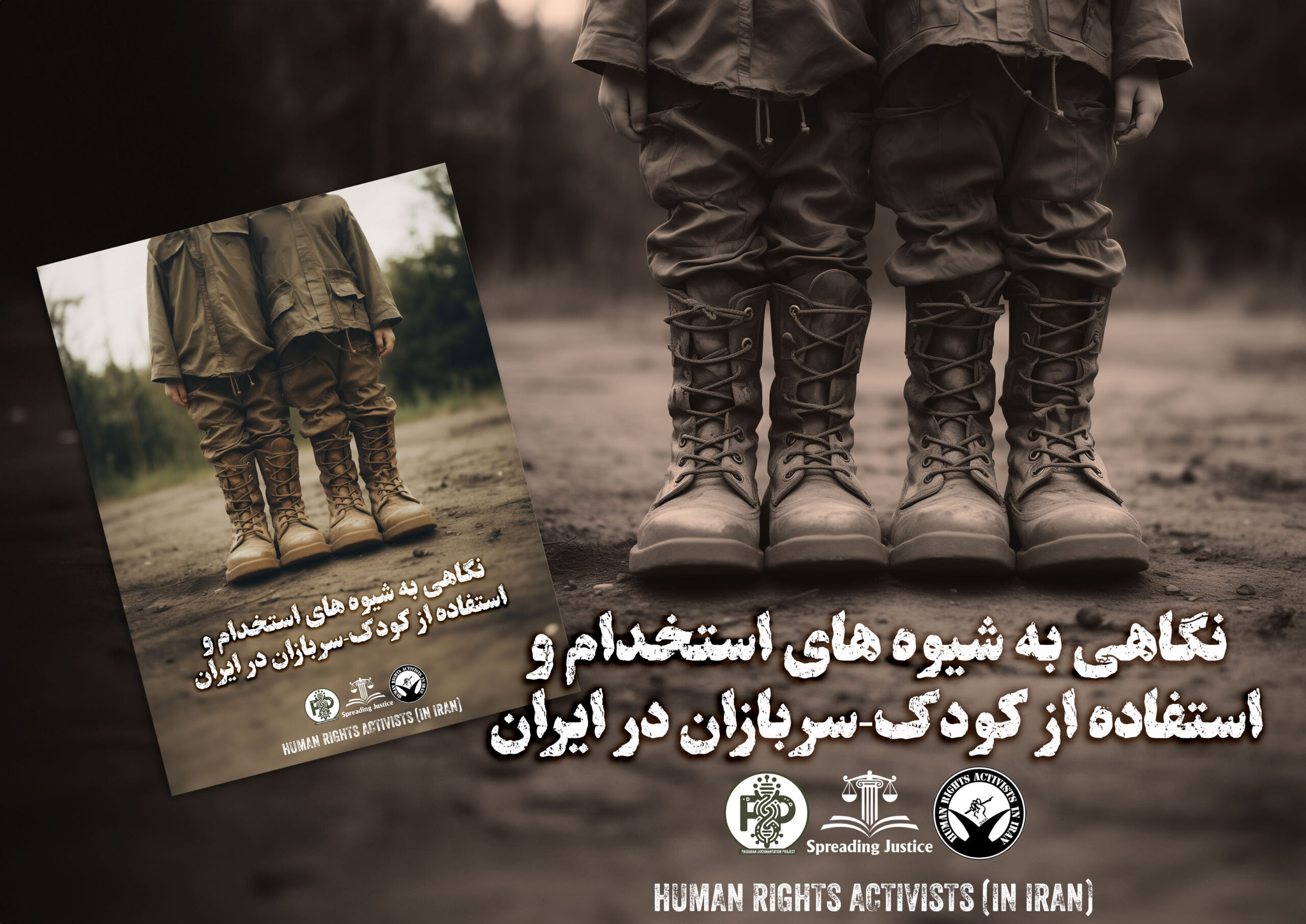
In a groundbreaking publication today, Human Rights Activists (HRA) has released an extensive report detailing Iran’s longstanding practice of recruiting the economically disadvantaged segments of society, including asylum seekers, immigrants, and using child soldiers in armed conflicts. The report particularly spotlights the exploitation of Afghan minors within the Fatemiyoun Division. This comprehensive investigation sheds light on a series of violations of international humanitarian law and international children’s rights, revealing the depth of Iran’s involvement in the recruitment, training, and deployment of children in combat zones.
The primary focus of this report, prepared by Spreading Justice (a database of human rights violators), the Pasdaran Documentation Initiative, and the HRANA news agency, is on the use of children—specifically individuals under 18 years of age—in war zones, who are predominantly of Afghan nationality and, to a lesser extent, Pakistani.
Purpose of Publishing the Report:
Click here to download the full report
Unmasking the Exploitation of Vulnerable Populations: The primary aim of this report is to unmask the systematic exploitation of vulnerable populations, with a particular focus on Afghan immigrants and minors, by Iran’s military and paramilitary forces. Through detailed accounts, testimonies, and evidence, HRA endeavors to bring to the forefront the realities of these practices that have long been shrouded in secrecy and obfuscation.
Promoting Transparency and Accountability: This report also aims to encourage transparency and accountability regarding the recruitment and use of child soldiers. By conducting a thorough analysis of Iran’s recruitment networks, training centers, and the roles played by various institutions and commanders, HRA seeks to ensure that those responsible for these violations are held accountable.
Encouraging International Action and Dialogue: This report aims to spur international action and dialogue on the urgent issue of child soldiers. It calls for a united global effort to address and mitigate the factors driving the recruitment of child soldiers, advocating for policy reforms and the implementation of protective measures in line with the principles of international humanitarian law and children’s rights.
Through this report, HRA not only highlights the grave injustices experienced by child soldiers but also provides a roadmap for change, urging all stakeholders to commit to protecting the most vulnerable in conflict zones.
Executive Summary: A Deep Dive into Iran’s Recruitment of Child Soldiers
HRA’s report is a comprehensive analysis that exposes Iran’s systematic recruitment and exploitation of child soldiers, particularly focusing on the use of Afghan minors within the ranks of the Fatemiyoun Division, a paramilitary group fighting in Syria under the auspices of the Islamic Revolutionary Guard Corps (IRGC). This investigation is the result of meticulous research, including interviews with former child soldiers, analysis of recruitment tactics, and examination of the training and deployment processes.
Key Findings of the Report:
Systematic Recruitment and Use of Child Soldiers: The report exposes Iran’s long-standing practice of systematically recruiting child soldiers, a practice dating back to the Iran-Iraq War and persisting through its involvement in the Syrian conflict. It details how Iran targets vulnerable populations, particularly Afghan refugees and immigrants, many of whom are minors, coercing them into military service with promises of financial rewards or legal residency.
Violation of International Laws and Conventions: The HRA’s findings reveal Iran’s egregious violations of international law, encompassing both International Humanitarian Law and International Human Rights Law. Despite its obligations under the Convention on the Rights of the Child (CRC), which prohibits the use of children under 15 in hostilities, Iran has been documented recruiting children as young as 14. This flagrant disregard for international norms extends to Iran’s failure to adhere to the International Labour Organization (ILO) Convention on child soldiers and Customary International Law. These actions highlight Iran’s blatant disregard for its international commitments and the urgent need for accountability.
Inadequate Training and Preparation: The investigation details the insufficient and hastily conducted training provided to these child soldiers and other recruits, often lasting only three to four weeks. The training primarily focuses on combat tactics rather than imparting a comprehensive understanding of International Humanitarian Law (IHL). This lack of proper training not only exposes these children to immense danger on the battlefield but also contravenes the principles of IHL, which Iran is obligated to teach its armed forces.
Exploitation and Coercion: The report exposes the exploitation and coercion inherent in Iran’s recruitment practices. Testimonies from former child soldiers and other former members reveal a troubling pattern of manipulation, where minors and individuals in precarious visa situations are coerced into combat roles under threats of violence or death. Promises of financial compensation and legal status made to them are consistently broken.
High Casualty Rates and Lack of Support: One of the most harrowing findings is the disproportionately high casualty rates among the Fatemiyoun Division’s child soldiers. Testimonies and data point to instances where a significant amount of child soldiers were deployed in combat operations with minimal support, resulting in significant loss of life and injury. Furthermore, the report criticizes the lack of adequate support for injured child soldiers and the families of those killed in action, highlighting a neglectful and dismissive attitude by the IRGC towards these individuals upon their return from Syria.
Call to Action: In light of these findings, the report urges immediate action from the international community, including the implementation of targeted human rights sanctions for human rights abusers, support from international organizations and non-governmental organizations working on the ground to protect vulnerable populations from recruitment. Emphasizing Iran’s duty to uphold international standards, the report urges Iran to immediately halt its recruitment of child soldiers and to initiate comprehensive measures for the rehabilitation and support of those already impacted by such egregious practices.
The report by HRA is not just a condemnation of Iran’s actions but a plea to safeguard the rights and well-being of children caught in conflicts. By shedding light on these issues, HRA seeks to catalyze global efforts to ensure that no child is coerced into bearing arms and that those who have suffered receive the support needed to rebuild their lives.
Methodological Challenges:
HRA report on the recruitment and use of child soldiers by Iran represents a significant accomplishment, prepared despite considerable security and information challenges. Conducting research in a context where access to reliable data is heavily restricted, and where subjects of investigation face significant risks, required innovative approaches and steadfast determination. The organization’s commitment to uncovering the truth led to the deployment of undercover investigations, extensive interviews with survivors, and collaboration with a network of local activists, all undertaken while ensuring the safety and anonymity of those involved.
The International Community’s Role
The international community cannot afford to overlook the findings of this report. The documented violations have profound implications for global peace, security, and human rights. Addressing the use of child soldiers requires a concerted effort from nations worldwide to:
Invitation to Engage
HRA urges all concerned individuals, organizations, and government entities to engage with this critical issue by reviewing the full report. By understanding the depth and severity of the violations against children in armed conflicts, collective work can be done to safeguard the rights of the vulnerable.
To access the comprehensive report and learn more about the findings and recommendations, please download the full PDF version by clicking on the image below. HRA encourages readers to contact us with any questions, insights, or support for our ongoing efforts to protect human rights worldwide.
The active involvement and support of individuals are instrumental in addressing the use of child soldiers and upholding human rights globally. Collaboratively, efforts aim to contribute to positive change, fostering a safer, more just world for future generations.
For more information please contact Skylar Thompson, Director of Global Advocacy and Accountability at Human Rights Activists in Iran (HRA) skylar[at]hramail.com
![[Panel discussion] Islamic Revolutionary Guard Corps: human rights violations and international crimes in Iran and beyond](https://spreadingjustice.org/wp-content/uploads/2026/01/hil09106-1.jpg)